
Teeth straightening
Invisalign or braces as an adult: what is treatment really like?
Many people choose to straighten their teeth as adults. The two main options are clear aligners, such as Invisalign, and fixed braces. Aligners are removable but need to be worn for about 22 hours a day. Braces stay in place but need careful cleaning and some changes to what you eat. Which suits you depends on how your teeth need to move, your oral health and your daily routine. Either way, you will need retainers afterwards.
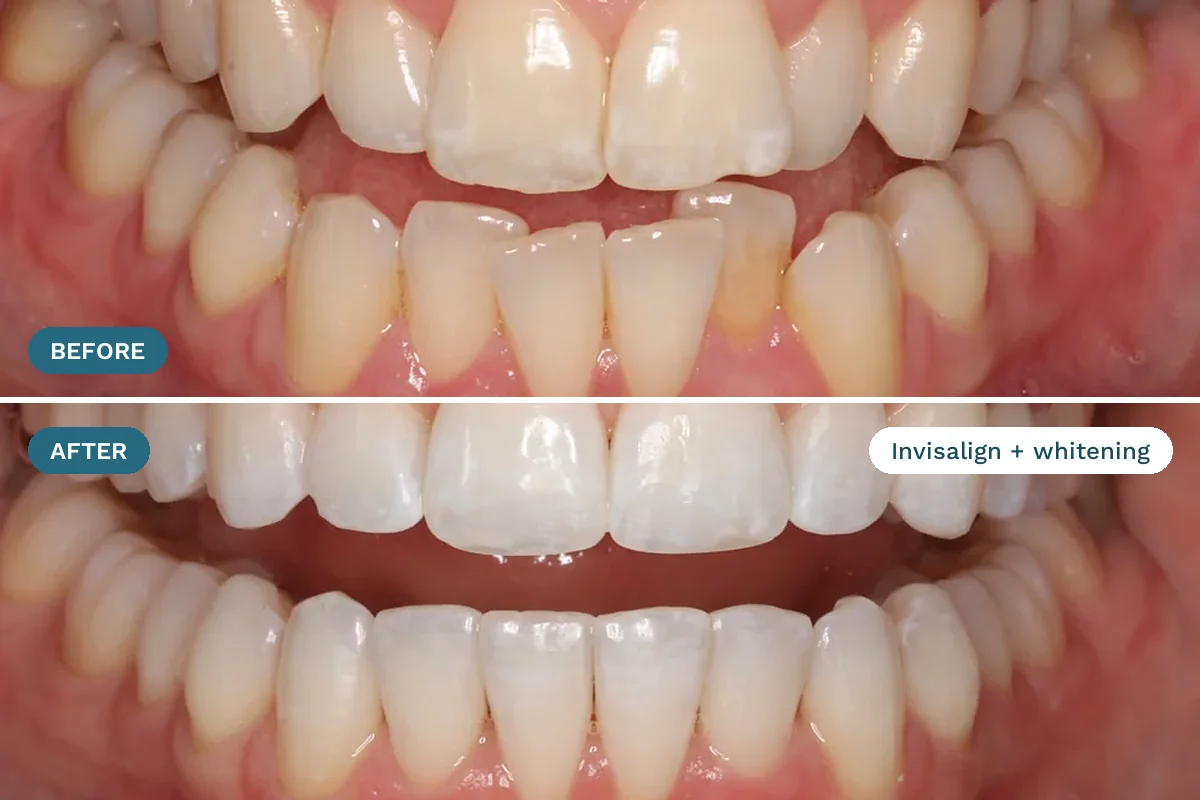
Invisalign and braces side by side
| Feature | Invisalign | Fixed braces |
|---|---|---|
| How it looks | Clear aligners that are hard to notice | Metal, tooth-coloured or fitted behind the teeth |
| Fixed or removable | Removable | Fixed |
| Daily wear | About 22 hours a day | Worn all the time |
| Eating | Taken out to eat, so no foods to avoid because of the aligners | Hard and sticky foods are best avoided |
| Cleaning | As normal, plus cleaning the aligners and brushing before they go back in | Takes longer, with small brushes around the brackets |
| Usual treatment time | Most cases 6 to 18 months | Most cases 12 to 24 months |
| Starting price | £3,500 | £3,000 |
| Often suitable for | Crowding, gaps and some bite problems | More complex cases, such as badly twisted teeth or bigger bite problems |
| After treatment | Retainers to hold the result | Retainers to hold the result |
Prices shown are starting points. We will confirm the total cost once we know how your teeth need to move.
How Invisalign works
Invisalign uses a series of clear, removable aligners made for your teeth. Each set moves your teeth a little, and you switch to the next one every 7 to 14 days, as we advise. Small tooth-coloured bumps are often added to some teeth to help the aligners grip.
We begin with a 3D scan on our iTero scanner. Before you go ahead, we can use the scan to show you a simulation of how we plan to move your teeth. The simulation is a guide, not a guarantee. Some cases need extra aligners near the end to fine-tune the result. Invisalign starts from £3,500.
Why Mark chose Invisalign
Mark wanted straighter teeth without fixed braces. Here he explains his reasons in his own words. Every patient's results are different.
Mark Warwick on choosing Invisalign
Everyday life with aligners
You need to wear aligners for about 22 hours a day, so you only take them out to eat, to drink anything other than water and to clean your teeth. After eating, brush before putting the aligners back in, so food is not trapped inside them. If you wear them less, your teeth may not move as planned and treatment can take longer.
Each new set can feel tight or sore for a few days, and some people notice a slight lisp at first.
When fixed braces may be the better choice
Fixed braces stay on your teeth throughout treatment, so you do not have to remember to put them back in. We may recommend them when teeth need more complex movement, such as turning badly twisted teeth or correcting bigger bite problems. More complex cases can take longer with either option, so the times in the table are not like for like. Both options can also involve wearing small elastic bands, gently smoothing the sides of some teeth to make space or, occasionally, removing a tooth. We will tell you if your treatment does.
Braces can be metal, tooth-coloured ceramic or lingual (fitted behind the teeth). Your teeth may feel sore after braces are fitted or adjusted, and the brackets can rub your lips, cheeks or tongue at first. It is best to avoid hard and sticky foods. Cleaning around the brackets takes more time, but it helps prevent tooth decay and gum problems.
Treatment is with our specialist orthodontist, Dr Saba Qureshi, and starts from £3,000. Read more about adult fixed braces.
Keeping your teeth straight afterwards
Whichever option you choose, you will need retainers when treatment ends, usually for the long term, because teeth can gradually move throughout life. This is also why teeth straightened years ago can move again. We will explain how often to wear your retainers and how to look after them. They may sometimes need repairing or replacing.
What we look at in your consultation
First, we ask what you want from treatment. Leaving your teeth as they are is also an option. Then we consider:
- How your teeth and bite need to move. This tells us whether to recommend aligners or braces.
- Your daily routine. We talk about how you would manage wearing aligners nearly all the time, including at work.
- Your gums and teeth. These need to be healthy before treatment starts. If anything needs treating first, we will tell you.
- Timescale, cost and risks. We explain these for each option before you decide.
Find out which option suits your teeth
Book a free Invisalign consultation at Didcot Dental Studio. We will check whether Invisalign is suitable for you. If fixed braces would work better, we will explain why. There is no obligation to go ahead.
BOOK A FREE INVISALIGN CONSULTATIONor call 01235 380888